Choosing a New AC System for Your Pasadena Home
Choosing a new AC system in Pasadena is not a casual home upgrade. It is one of those decisions you feel for years, every hot afternoon, every utility bill, and every summer weekend when the system has to keep going without complaint. In a place where July averages a high of 89.1°F and August averages 91.3°F, cooling equipment does real work. Pasadena also sees a large number of very hot days in summer, with July averaging 15.4 days at or above 90°F and August averaging 19.4 days at or above 90°F. That kind of heat changes the conversation. You are not buying a machine for a few rough afternoons. You are choosing a system that will carry a serious seasonal load.
That is why the best AC choice is rarely about chasing the highest advertised efficiency number or grabbing the cheapest bid. The right choice is the one that fits your home, your comfort expectations, and the way the equipment is installed. A well-chosen system can feel quiet, steady, and almost invisible. A poor choice tends to announce itself quickly through uneven temperatures, short cycling, surprise repairs, and rooms that never quite feel right.
Why Pasadena heat changes the stakes
Some climates let homeowners get away with mediocre cooling. Pasadena is not especially forgiving in that way. When your system has to handle repeated 90-plus degree days, little mistakes become big ones. A unit that is slightly too large may switch on and off too often. A duct system with leaks may waste more of the cooled air than you realize. Equipment that was installed without careful sizing can leave one part of the house cold and another stubbornly warm.
People often focus on the box outside or the air handler in the attic, but the day-to-day comfort of a home depends on the whole system working together. That includes the equipment match, the ductwork, and the quality of the installation. Federal guidance and ENERGY STAR both stress this point for good reason. Oversized systems can short-cycle, which can shorten equipment life. Improper refrigerant charging can increase energy use and raise the risk of failure. Leaky ducts can cut into efficiency and comfort at the same time.
When summers are long and hot, those details are not technical trivia. They are the difference between a home that stays comfortable and one that sends you hunting for fans by midafternoon.
The first question is not brand, it is timing
A lot of homeowners start shopping only after a breakdown. That is understandable, especially when an old system limps along for years and then fails during the hottest stretch of the season. But a rushed replacement is rarely when you do your best thinking. If your current setup is still operating, even unevenly, there is value in stepping back and asking whether you are dealing with a repair problem or a replacement problem.
ENERGY STAR points to a few common signs that it may be time to replace HVAC equipment:
- The unit is older than 10 years.
- Repairs are becoming frequent.
- Energy bills are rising.
- Some rooms are too hot or too cold.
- The system is no longer keeping up reliably.
Those signs tend to show up together. A homeowner notices that one bedroom never cools properly, then realizes the system needed service twice last year, then looks at the summer utility bills and starts doing the math. At that point, replacement becomes less about reacting to one repair and more about deciding what kind of comfort you want for the next decade.
There is also a practical angle that many people only appreciate after a failure. If your system stops during a Pasadena heat spell, you may end up calling for emergency HVAC help simply to get through the week. Emergency HVAC services have their place, and when your cooling quits in dangerous heat, they can be essential. But those calls are about restoring operation fast, not about giving you ideal conditions for comparing equipment options calmly. If your current system is aging and showing the usual warning signs, replacing it before it becomes a true emergency often leads to a better decision.
Central AC is not the only path anymore
For years, many homeowners assumed the choice was basically one kind of central air conditioner or another. That is no longer the full picture. The U.S. Department of Energy says modern air-source heat pumps can cool homes efficiently in summer and serve as an energy-efficient alternative to traditional AC and furnaces. ENERGY STAR also notes that in many cases a central air conditioner can be replaced with a heat pump for a modest additional cost, and that this may allow a homeowner to eliminate or downsize a furnace.
That matters because a replacement decision can be bigger than cooling alone. If you currently have central AC and a furnace, it may be worth discussing whether a heat pump makes sense in your home. The appeal is straightforward. Instead of choosing a cooling-only system that still depends entirely on a separate furnace for heating, you may be able to install a system that handles cooling efficiently and changes the heating side of the equation too.
That does not automatically mean a heat pump is the right answer for every Pasadena home. It means it should be part of the conversation. Too many homeowners replace like for like without asking whether the newer generation of equipment opens up a better option. Even if you ultimately choose another central AC system, you are better off after making a real comparison.
What matters more than the brochure
Manufacturers give homeowners plenty to look at, but the most important parts of a successful replacement are often less flashy. Proper sizing comes first. ENERGY STAR recommends correctly sized and matched equipment based on load calculations, along with a well-sealed duct system. That phrase, load calculations, deserves more attention than it usually gets. It means the system should be selected based on the actual cooling needs of the house, not just the size of the old unit or a rule of thumb.
I have seen how often homeowners assume the old unit must have been sized correctly because it cooled the house for years. That is not a safe assumption. A house may have had comfort complaints for a long time, but the family got used to them. Or the old system might have been oversized from day one and survived despite cycling too often. Replacing old mistakes with new equipment is still a mistake.
Oversizing is especially tempting because it sounds protective. People think bigger means colder, faster, and safer during heat waves. In practice, oversizing can create short cycling, which ENERGY STAR warns can shorten equipment life. Short cycling can also make a home feel less settled. The system starts, blasts conditioned air, shuts off, and repeats. That is not the same as steady, controlled comfort.
Installation quality deserves equal weight. The Department of Energy warns that improper charging and leaky ducts can reduce efficiency, cause discomfort, and shorten equipment life. This is where a lot of expensive systems fail to deliver what the homeowner thought they were buying. The label may promise strong efficiency, but the house experiences something very different because the install was rushed or key details were ignored.
Ducts are not glamorous, but they decide a lot
If there is one part of the replacement conversation homeowners tend to overlook, it is the duct system. Understandably so. New equipment is easier to picture. Ductwork is hidden, dusty, and less exciting to talk about. But ENERGY STAR specifically points to a well-sealed duct system as a factor in good HVAC performance, and DOE notes that leaky ducts reduce efficiency and comfort.
That has real consequences in lived use. When one room struggles while another gets too cold, the cause is not always the equipment itself. Poor airflow, leakage, or a mismatch between the new unit and the existing ducts can keep a high-quality system from ever feeling right. It is frustrating to spend real money on replacement and then discover the comfort problems never fully went away because the ducts were treated as an afterthought.
This is where a thoughtful estimate stands out from a generic sales pitch. A serious proposal should not act as if HVAC services every Pasadena house can take any system without examining how air will actually move through the home. Even if the final answer is that the existing ducts are serviceable, it is worth hearing that judgment explained rather than assumed.
Efficiency matters, but only if the install is right
Efficiency ratings get a lot of attention because they offer a simple comparison. Simplicity is appealing when the rest of the process feels technical. But the performance you live with depends on more than the published rating. ENERGY STAR says properly installed high-efficiency systems can save up to 20% on heating and cooling costs. That wording matters. Properly installed is doing a lot of work in that sentence.
Homeowners sometimes stretch their budgets to buy more efficient equipment, then unknowingly accept a poor installation that erodes the benefit. A careful install may not be the most dramatic part of the project, but it is often the part that protects your investment. If the refrigerant charge is wrong, if the system is oversized, or if the ducts leak, your results may fall short even when the equipment itself is excellent.
That is also why the cheapest bid can be expensive in disguise. I do not mean every lower bid is bad. Sometimes prices differ for honest reasons. But if one proposal seems much lower while skipping important conversations about sizing, equipment match, or duct condition, that price may be leaving out the very work that determines whether the system performs well.
Central AC or heat pump, how to think about the trade-off
For many Pasadena homeowners, this is the pivot point. Do you replace your old central AC with a newer central AC, or do you look at a modern air-source heat pump?
The cleanest way to think about it is this. If you want cooling only from the new equipment and expect your heating setup to remain unchanged, a central AC replacement may feel familiar and straightforward. If you are open to a system that cools efficiently in summer and changes the role of your furnace, a heat pump deserves close attention. DOE and ENERGY STAR both support that it can be an energy-efficient alternative, and that replacing central AC with a heat pump may only require a modest additional cost in some cases.
The details depend on your home and how the equipment is configured. That is why this choice should not be made from advertising alone. The right conversation is not just, “Which one is better?” It is, “Which one fits this house, this duct system, and this homeowner’s goals?”
Some people are mainly driven by lower operating costs. Some care most about getting rid of a pattern of repairs. Others want one system that can handle more of the home’s comfort needs. None of those priorities are wrong. What matters is matching the equipment type to the reason you are replacing in the first place.
Questions worth asking before you sign
A good contractor should be comfortable answering clear, practical questions. If the conversation stays vague, that is usually a warning sign. Here are a few questions that tend to reveal whether the estimate is grounded in real system design or just quick selling.
- How are you determining the correct size for my home?
- Are you evaluating whether the existing ducts are well sealed and suitable for the new system?
- Is the equipment being matched properly, not just swapped in?
- If I am considering a heat pump, how would that change the role of my current heating setup?
- What steps will you take to make sure the system is charged and installed correctly?
You do not need HVAC system replacement to turn into an HVAC engineer overnight. You just need enough clarity to tell whether the person across from you is respecting the complexity of the job. A careful answer is usually specific. A weak answer tends to lean on generalities like “this is what most houses use” or “bigger is better for hot weather.” Those shortcuts often lead to long-term regret.
The comfort problems homeowners misread
One of the more common mistakes in AC replacement is misdiagnosing the problem. If a house has hot and cold spots, the homeowner may assume the equipment is simply too old or too weak. Sometimes that is true. Sometimes the root issue is system design or duct performance, and a replacement only solves part of the problem unless those issues are addressed too.
Another common misunderstanding is the idea that fast cooling equals good cooling. A system that drops the temperature quickly may seem impressive during a sales pitch or a quick test. But day-to-day comfort in a Pasadena summer is about how well the system handles repeated hot days over time. A properly sized system that runs in a steadier, more controlled way is often better for comfort and equipment life than one that powers on in aggressive bursts and shuts off just as quickly.
That is one reason I encourage homeowners to talk about how the house actually feels, not just whether the old unit still turns on. Which rooms stay warm? Does the system run constantly on the hottest days, or does it blast and stop? Have bills climbed even though your habits have not changed much? Those details can help frame the replacement more intelligently.
Planning ahead beats the panic purchase
Nobody likes shopping for cooling equipment under pressure. Yet that is exactly how many replacements happen. The old system hangs on until one of those long 90-degree stretches, then quits at the worst moment. Suddenly the job is less about evaluating options and more about getting cold air back by tomorrow. That is when emergency HVAC calls happen, and there are times when emergency HVAC services are absolutely the right response. Health, safety, and immediate habitability come first.
Still, if you have any warning at all that the system is nearing the end, planning ahead is worth it. You can compare a standard central AC replacement with a heat pump. You can ask better questions about sizing. You can look at whether the ducts need attention. You can decide based on your home rather than your stress level.
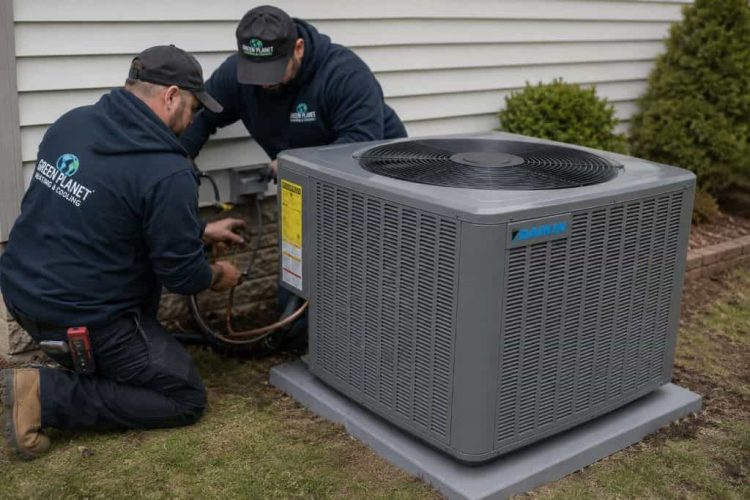
A calm replacement process usually leads to better outcomes because it leaves room for judgment. You can think through trade-offs instead of defaulting to the fastest available install. That matters more in Pasadena than in milder places, because the system you choose is going to be tested hard.
What a smart decision usually looks like
The smartest AC replacement decisions tend to share a few traits, even when the homes and budgets are different. The homeowner does not focus only on the equipment box. They pay attention to system sizing, duct condition, and installation quality. They consider whether a modern heat pump might make more sense than a simple one-for-one AC swap. They understand that high efficiency only pays off when the system is installed properly. And they try not to wait until a midsummer breakdown forces a rushed decision.
That approach is less exciting than shopping by slogan, but it usually works better. In a Pasadena home, good cooling should feel steady and dependable, not dramatic. You should not have to think about the system much once it is in, because the house stays comfortable and the equipment does its job.
If your current unit is over 10 years old, needs frequent repairs, drives up bills, or leaves parts of the house too hot or too cold, it is time to start the conversation seriously. Between Pasadena’s hot summers and the number of days above 90°F, cooling is not a luxury purchase here. It is core home infrastructure. Choose the system with care, insist on proper sizing and installation, and you are far more likely to end up with the kind of comfort that lasts.